


Therapy games that take their own data
Games your clients love, recording every trial at its cue level while you run the session, not the clipboard.


Try it. You’re the client:
Tap the blue one
Session record, writing itself
Your first trial will land here.
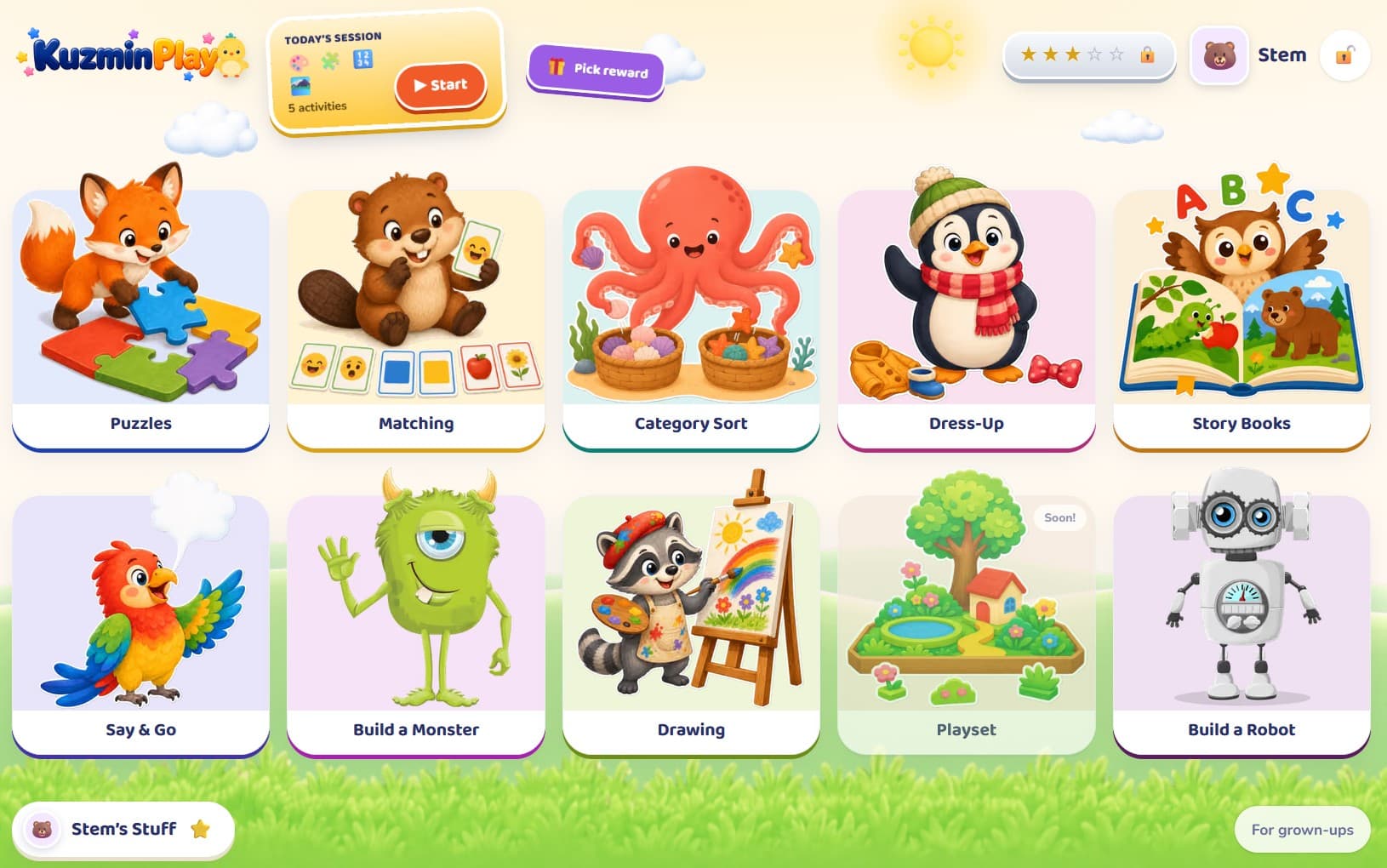
A real screenshot, not a mockup. Sixteen games fold into ten tiles, because a pre-reader who has started scanning has stopped recognising. Today’s session waits at the top, and everything a grown-up can change sits behind the lock.
From first session to sent-home practice
- 1
Add a child
A nickname and an avatar. The profile is a data label, never an account, and never more than that.
- 2
Run the evaluation
A short probe battery finds each skill's level and the right amount of support to start at. No guessing week.
- 3
Play
Fourteen scored games record every trial at its cue level while the child just plays. Wrong taps never lock the board.
- 4
Send practice home
Families get a magic link, a tiny weekly plan, and your one-line note. Completion flows back to you.
Sixteen games. One record.
Matching, sequencing, categories, emotions, requesting, dress-up, story books. Fourteen scored games feed one per-child record; Drawing and Playset stay deliberately unscored, the pressure-free breaks between demands.
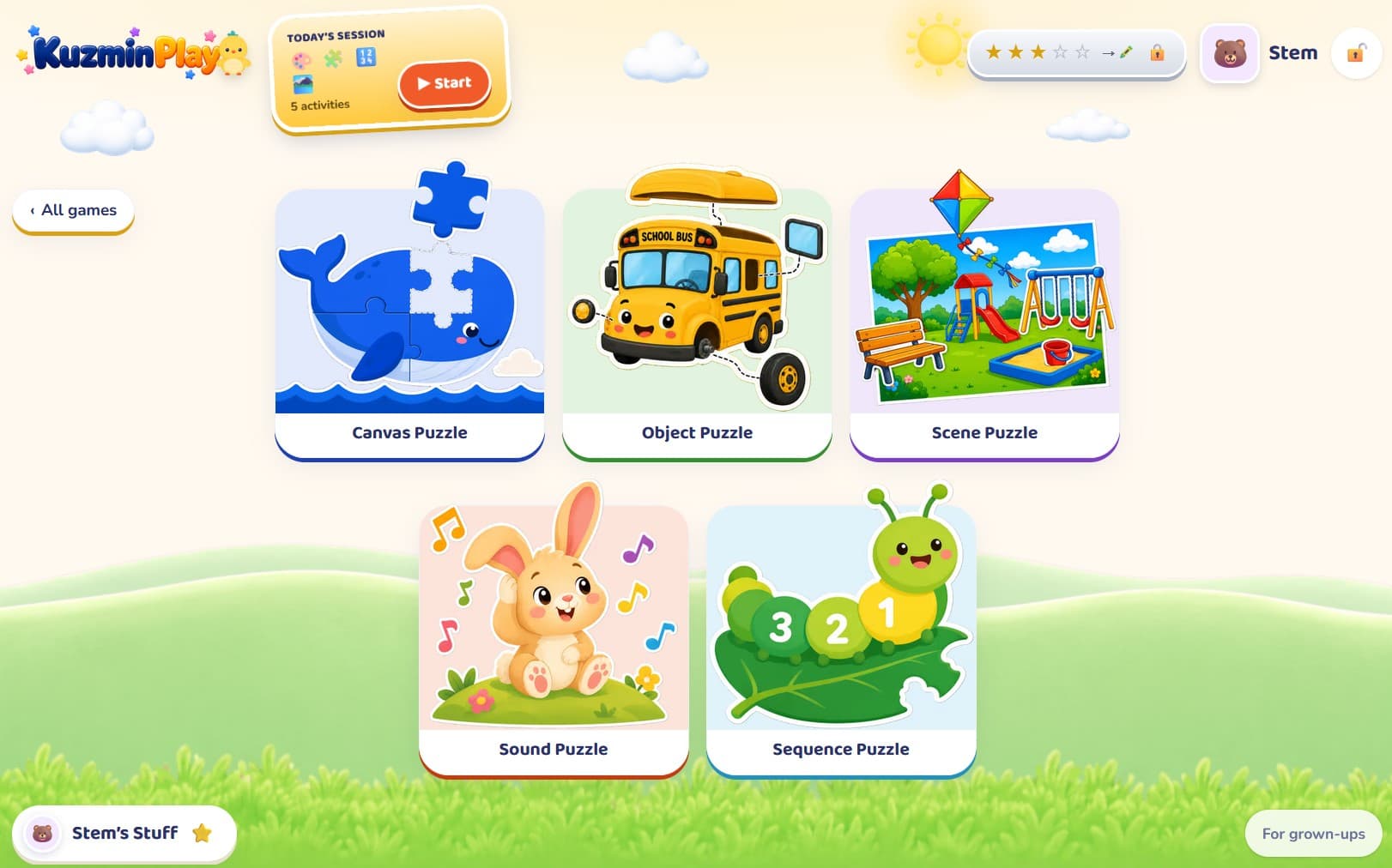
One tile opens five. Grouping is what keeps the shelf short without taking a game away.
The whole shelf, each game in its own colour
Tap any cover for what the game is and what it targets in early intervention.
Plus a trial counter for table work, so flashcards and books get the same record as the games.
Find the star’s house
The answer stays highlighted the whole time and the other choices fade back, guiding the child straight to it.
Every trial records at its rung: S5 · Errorless
Support fades before difficulty rises
Every scored game runs on a five-rung cue ladder, from errorless down to fully independent. The staircase fades help as the child succeeds and only then raises the content, and you can set both dials yourself, or pin them outright, whenever your clinical judgment says so.
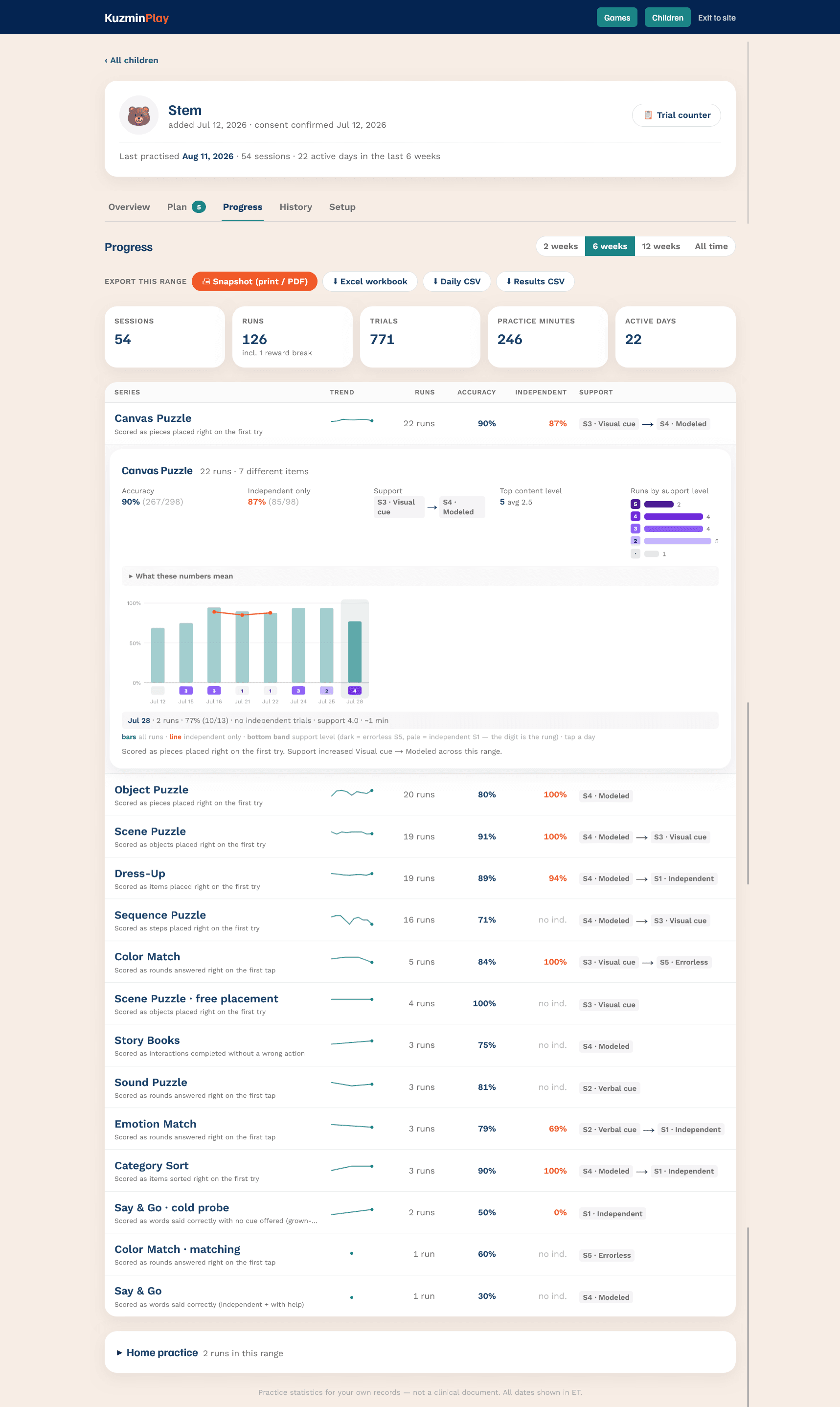
Because the rung is recorded on every trial, your charts separate what the child did alone from what they did with help. Independence you can show, not guess.
Walk into the IEP meeting already done
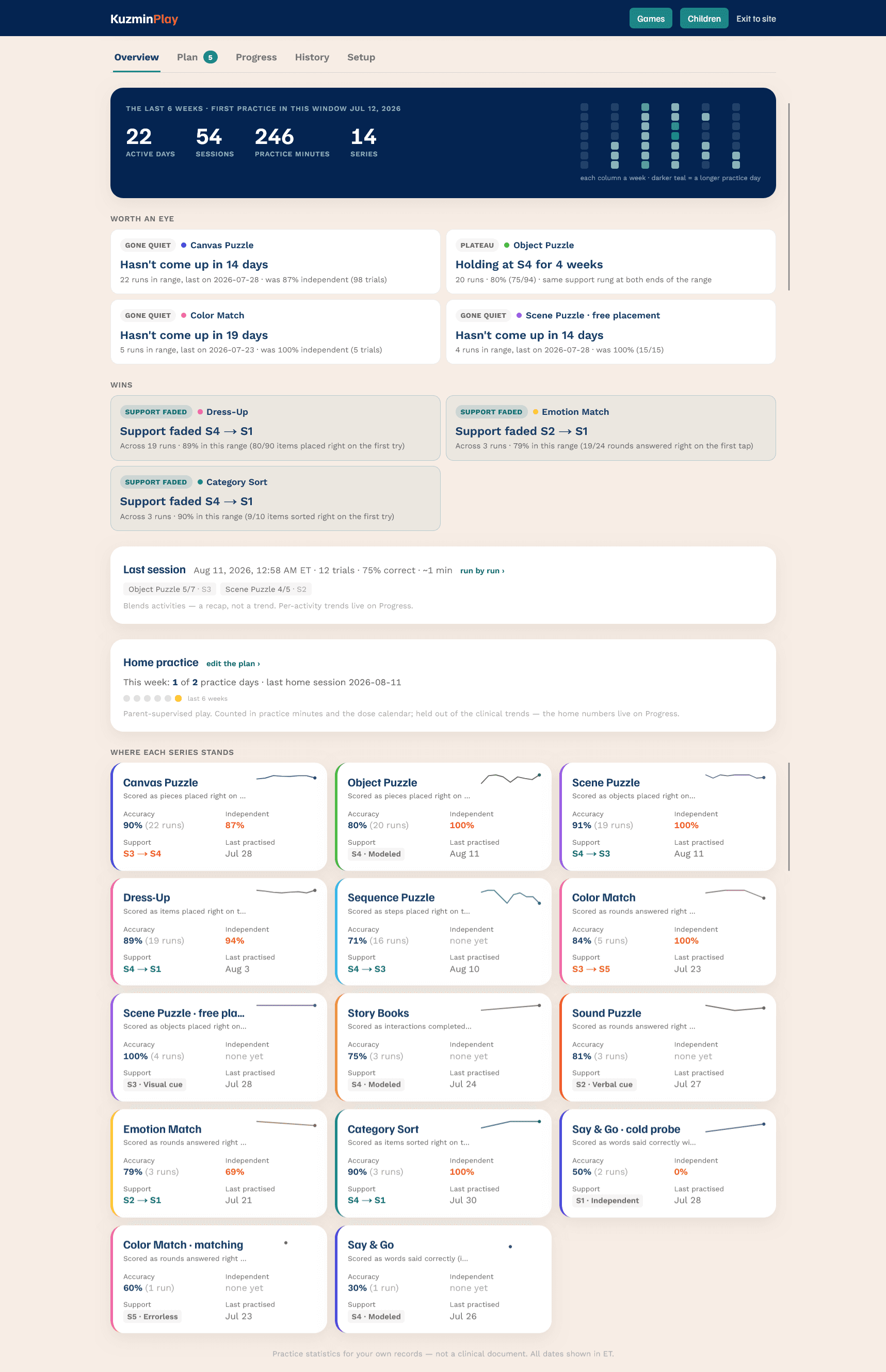
A per-child dashboard turns the stream of trials into the picture you actually report: baselines from the evaluation, per-skill trends, ready-to-advance signals, and a printable snapshot.
Baseline first
The evaluation starts from independent-only probes for an honest floor, then measures how much help unlocks more.
Signals, not homework
Ready-to-advance flags and regression watches surface on their own. You decide; it never moves without you.
Reports in one tap
A printable progress snapshot plus CSV and XLSX exports, formatted for the meeting you're walking into.
Built for real sessions, and for the week between them
First work, then the fun one
A token board runs across every game and the table too. You award the tokens; a full board launches the game the child picked, then brings them gently back to work.
0 of 5 tokens
The child picks the reward before the work starts. Choosing is half the motivation, and the choice is theirs every session.
Home practice, without homework fights
Parents sign in with a link or a 6-digit code. They see the week’s plan, your note, and stars. Never percentages, never pressure.
This week with Milo 🦊
From your speech therapist: “Listen for the first sound in each word.”
Table work counts too
The trial counter tallies flashcards, books, anything beside the iPad, into the same record: correct, cued, incorrect, cold probes and all.
Built inside a working EI practice
KuzminPlay comes from Margaryta Kuzmin, the award-winning bilingual SLP behind KuzminSLP’s ASHA-approved continuing education courses. Every mechanic here earned its place in real sessions first.
Meet the clinician behind it- Child profiles are nicknames only. By design, there is nowhere to put more.
- No ads and no third-party analytics ever touch a child-facing screen.
- Deleting a child removes every record from the live system immediately; encrypted backups age out within 30 days.
- Practice statistics, clearly labeled. Never presented as a clinical record.
One price, your whole caseload
KuzminPlay is a single subscription. Join at beta and you pay the founding price for as long as you keep it.
$9per month
At beta launch, for the people on the waitlist.
- Every game and every tool, for your whole caseload.
- New activities, new content and every update, included as they arrive.
- $9 stays $9 as the shelf grows, for as long as your subscription stays active.
- The waitlist is invited first.
$19.95per month
The price at full release.
- The same single subscription, at the standard rate.
- New activities, new content and every update, included as they arrive.
- Founding members are not moved onto it.
Prices in USD. There is nothing to pay today: KuzminPlay is not open yet, and the waitlist is how you get in. The founding price holds while your subscription stays active; if it lapses, coming back is at the price of the day.
Join the waitlistQuestions SLPs ask us
When does KuzminPlay launch?
It's in active development and already runs full sessions end to end. A beta opens first, and the waitlist is invited to it before anyone else.
What will it cost?
One subscription for your whole caseload: $9 a month at beta, $19.95 a month once it fully releases. Join during the beta and you keep $9 for as long as your subscription stays active.
What happens to my $9 when the price goes up?
Nothing, as long as you stay subscribed. Founding members are not moved onto the full-release price. The one thing that ends it is letting the subscription lapse: if you cancel and come back later, you rejoin at whatever the price is that day.
What do I run it on?
It's built iPad-first and runs in any modern browser, no app store needed. It installs to the home screen and plays full-screen like a native app.
Who is it for?
Pediatric SLPs from Early Intervention through school age. The games target receptive and expressive language, emotions, categories, sequencing and requesting, and the trial counter covers articulation drill and anything else you run at the table.
Can families use it at home?
Yes. You invite a parent by email; they sign in with a link or a 6-digit code, no password. They see a tiny weekly plan and your note, never raw clinical data, and completion flows back to your dashboard.
Is my clients' data safe?
Profiles are nicknames only; by design there is nowhere to put more. No ads and no third-party analytics touch the child-facing surfaces. Deleting a child removes every record from the live system immediately, and encrypted backups age out within 30 days. KuzminPlay keeps practice statistics; it is not a medical record.
Be first through the door
It already runs full sessions end to end. The beta is about putting it in your hands first.